
The power of a single computing cabinet in the server room has soared from 210kW in the past to 2050kW, and the electricity load of a hyperscale AI data center has directly reached 1 GW, which is equivalent to the peak electricity consumption of a medium-sized city in summer. People usually focus on chip manufacturing processes and video memory bandwidth, but they ignore the physical devices that step down high voltage power to the chips.
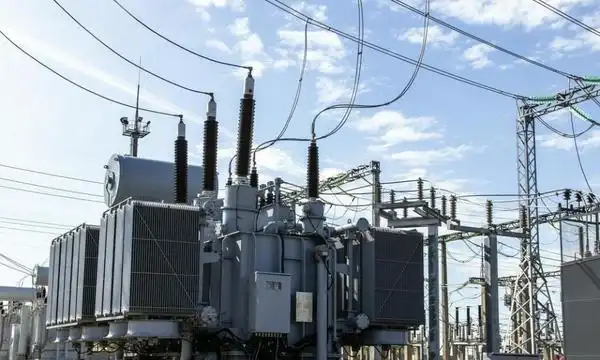
Without a transformer, the data center cannot even undergo a power-on test.
According to Wood Mackenzie’s data, the global power transformer shortage has reached 30%, and the distribution transformer shortage is also 10%. The research report provided by Citi analysts is even more straightforward, stating that this shortage will persist until at least 2029. The power grid conversion equipment, which originally belonged to the heavy industry sector, has been abruptly pulled into a critical bottleneck limiting the implementation of computing power by the expansion of data centers.
There has been an extremely severe supply gap in the transformer production capacity in the United States.
Currently, 80% of large transformers in the United States rely on imports, with the domestic production capacity being only 200 to 300 large power transformers per year. However, this year alone, newly established data centers will require thousands of transformers. This does not even account for the replacement needs of aging power grids built in the 1960s and 1970s, with an average service life exceeding 35 years. The shortage of skilled technicians and raw materials such as electrical steel and copper, coupled with the fact that expanding a new transformer factory requires a cycle of up to 3 years, makes it impossible to keep up with the demand.
The delivery cycle for a new transformer has directly extended from the previous 12 months to over 24 months. Technology giants, with budgets of hundreds of billions of dollars, are preparing to build data centers, hoping to have the server rooms online and operational within 18 months. However, the delivery of power equipment is scheduled for two years later. In the first quarter of 2026 alone, at least 75 data center projects across the United States were forced to be suspended or postponed due to delays in waiting for transformers and grid access, stalling a total investment of $130 billion. In order to ensure timely startup, some companies even resorted to purchasing second-hand transformers for refurbishment as an emergency measure.
Orders are directly directed towards the Yangtze River Delta.
In the transformer production workshops around Changzhou, overseas buyers even directly station themselves in the factory to monitor orders, solely for the purpose of securing subsequent production line positions at the earliest possible moment during equipment factory acceptance. Enterprises like Jiangsu Huapeng and Ankao Zhidian have successively secured tens of millions of dollars worth of orders from North America and other regions. Traditional overseas equipment manufacturers often have to wait for one and a half to two years, whereas Yangtze River Delta enterprises, leveraging the supporting chain, can ship and deliver the equipment as early as four months after signing the contract.
The delivery time is off by a full four times.
Currently, China accounts for approximately 60% of the global transformer production capacity, with the total export value of transformers reaching 64.6 billion yuan in 2025. The key lies in the fact that over 90% of the transformers supporting computing power are non-standard customizations, requiring one-to-one design based on the voltage and power consumption curve of the computer room. Within a radius of 100 kilometers from the Yangtze River Delta, all components such as iron cores, coils, and insulation parts can be fully sourced. This customization response speed brought by industrial density has become a hard indicator that multinational buyers cannot bypass.
Many people think this is just an ordinary low-price strategy, but the public customs data is very intuitive. The average export price of transformers in high-profit segments such as 220330 MVA has increased by 54% year-on-year. This is a stable delivery premium under the background of industry-wide shortage. For a computing power project, starting one day earlier can save time costs that far exceed the premium of the equipment.
Even facing tariff restrictions, buyers are still finding ways to bypass the restrictions and place orders. In the first two months of 2026, China’s exports of large transformers (over 10MVA) to the United States surged by 182%. Although established giants such as Siemens and Hitachi have also planned expansion projects in North America, it will take until 2027 at the earliest for those newly built factories to actually start producing equipment.
Regions such as Texas and the Mid-Atlantic in the United States have approved tens of billions of dollars for transmission capacity expansion, while Europe and the Middle East are also simultaneously advancing the integration of new energy into the grid and the renovation of existing grids. The overlapping demands from multiple parties have directly pushed transformers, a traditional industrial product, to the forefront of the battle for computing power. Before the implementation of new production capacity, the production lines in the Yangtze River Delta workshops operating at full capacity serve as the most tangible physical support for the global expansion of computing power and energy consumption.







Hi, this is a comment.
To get started with moderating, editing, and deleting comments, please visit the Comments screen in the dashboard.
Commenter avatars come from Gravatar.